%20playeasy%20logo.png?width=150&height=34&name=(PNG%20BLACK)%20playeasy%20logo.png "(PNG BLACK) playeasy logo")

How Lansing Sports Commission Drives Long-Term Impact Through Storytelling & Events
Meghan Ziehmer, Executive Director Lansing Sports Commission
In this thought leader series, Meghan from the Lansing Sports Commission shares how they approach sports tourism through a storytelling, community engagement, and long-term impact lens. Learn how their team is reimagining destination marketing, elevating event experiences, and building strategies that create value well beyond game day.
"We don’t try to be flashy. We focus on telling the story of the events and the people we bring into our community and let that speak for itself."
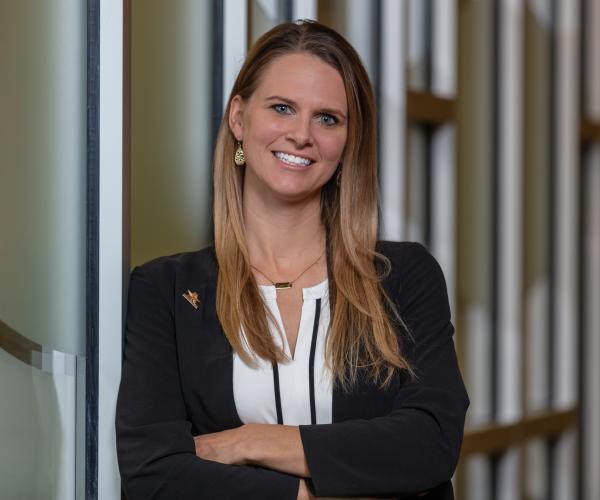
Meghan Ziehmer
Executive Director
Q1: How does your team think about destination marketing today? What channels or strategies matter most in today’s landscape?
Here in Lansing we’ve tried to take a different approach than most. So, obviously, we value our partnership with Playeasy to get our offerings out to the rights holders across the country. We also are still on social media, maintain our website and blog posts, do some local and national media buys, some TV, and occasional radio.
We’ve stepped away from stagnant ad placements and aren’t in a ton of magazines like we used to be. You might see a feature here and there, but one of the things we’ve really started to rely on is word of mouth and our digital presence.
But something we’ve also put a big focus on is local awareness and getting buy-in from residents to support the economy-boosting events we’re bringing in. At the end of the day, our residents live, work, and play here - so we need to support them first and make sure they have assets to see the value and benefit from the events we bring in.
For example, we're bringing in an international figure skating competition in April which is an exciting event to promote to the community. It’s a great opportunity for our local skaters here in Lansing, but also for skaters across the state to have access to an international competition right at their fingertips that they can come and see. We really try hard to start at that local base and then grow our opportunities from there.
Q2: How do you use sports tourism and major events to create long-term value for both your local community and your destination overall?
It’s really about assets. The more people we bring in, the more development we can support, and the more community assets we’re able to create. Those assets then give us better opportunities to bring people in and boost our economy through sports tourism.
At the same time, it creates more opportunities for our locals. By bringing in outside events, we’re increasing what we’re capable of doing here and creating new assets that benefit the community as a whole. That’s really the story we tell.
When we’re selling or working with rights holders, event owners, and partners, we roll out the red carpet for every single one of them. It doesn’t matter if it’s a 20-person event or a 2,000-person event - everyone gets the same level of service from our team. That’s something we’re very intentional about.
Through Playeasy, we’ve been able to leverage testimonials and share real examples, which has created additional buzz and opportunities. Our advertising is very intentional. We don’t just throw our logo on everything - we’re focused on telling a story about our destination.
Q3: With community buy-in being so important, how do you tangibly measure that for how you're performing in that area?
That's a great question because it's something that's hard to measure. Part of the problem that we're having is - how do you truly measure that? And I think one of the things that we have found is that, while there's nothing tangible that we can say, “Hey, this is how we truly measure it”, it's through some of the word of mouth and the opportunities that have been created because of that.
A good example is a recent event we hosted where we focused on telling the whole story – interviewing people apart of the event and residents, showing how many people attended, the economic impact it created for the region, etc. We’re now in the process of building a new venue dedicated to that sport which might not have been possible if it weren’t for telling that story. And having this venue in the pipeline has already led to conversations about bringing in even more events down the road that can now be hosted at this venue.
So that's where we're really trying to get the community buy-in is to say, “If we invest on this side of things a little bit, look at the trickle-down effect that it creates. It creates an asset for the region. It creates a touchpoint for all of these community partners. But then it brings thousands of people into our community to help boost economic impact, so that we can continue to expand these resources across our region".
Jake's Take
Talk about passion. I don’t get the chance to work with Meghan often, but hearing her speak so enthusiastically about Lansing and the work her team does was incredibly impressive. It’s obvious how much pride she takes in their destination and the role sports tourism plays in the community.
What stood out most is the different angle Lansing takes in their destination marketing. Instead of putting themselves at the center, their focus is on service, storytelling, and community buy-in. They let the events and the people behind them take the spotlight, while their team works behind the scenes to elevate the experience.
As a former athlete, the extra touch points resonated with me. The small details Lansing prioritizes for athletes like signage that makes teams feel welcomed, thoughtful touches at venues, and being present onsite are the kinds of things that make you feel special as an athlete. Those moments stick with you long after the event ends!
Meghan and her team are a great reminder that you don’t have to be the flashiest city to stand out. When it’s clear you go above and beyond for your partners, the story tends to speak for itself and you attract the right partners.
Share Your Success
Reach out to me at jhughes@playeasy.com if you'd like to share your success on Playeasy!
Q4: What role do events play in your marketing strategy?
It’s definitely a tiered approach for how events play a role in our marketing strategy. A lot of the community doesn’t even realize sports tourism is a thing or understand the services we provide as a full-service sports commission. We use our events to educate the community on who we are and what we do, but without taking the spotlight.
We’ve had to reinvent ourselves a little bit and get creative to share more about the incredible things people can do in Lansing. We’re traditionally a government town and it can get quieter when University isn’t in session, so we use our events as an opportunity to showcase what’s going on here locally for residents.
For the rights holders, we’re also able to showcase the extra touch points we put on our events which we take a lot of pride in. We’re measured by the number of events we host, not room nights. Marketing events gives us the opportunity to show we want your event to be a success just as much as you do.
Q5: What are examples of those touchpoints?
For example, we have a large wrestling event with Nuway coming up. When guests arrive at the Lansing Center, they’ll see full elevator and floor graphics welcoming them to the city. And it’s not a sign taped to the wall, it’s something that is actually built into the venue, and that’s all compliments of our team.
We also make sure we’re onsite to answer questions, direct people to restaurants, shopping, and anything they might need. We’ll bring gifts to tournament directors at their hotels and really become an extension of their staff.
It’s not just, “You signed your facility contract, here are your hotels.” We’re onsite at most events, sharing content on social media, tagging rights holders, and making sure the community knows they’re here. We’ll put welcome signs up at local restaurants and attractions and line up deals and discounts, like offering reduced Broadway tickets when a large group is in town.
All of those extra touches add up, and in many ways, we become an unpaid part of our event rights holders’ team.
Q6: How do you approach telling your destination’s story without putting yourselves at the center of it?
We really tell that story through our digital platforms and are intentional about getting the message across. Yes, we are selling Lansing, but we’re doing it by elevating the events themselves.
It’s not necessarily “Lansing” or “Lansing Sports Commission” in your face all the time. It might be, “Hey, USA Hockey is here,” and we’re celebrating the fact that these are national champions coming into our community. That group becomes the focal point, with us more in the background.
We also leverage the fact that a lot of rights holders like to share their story. So whether that’s getting local media onsite, featuring them in a news release, or connecting them with our radio partners, people like to share what they’re doing.
We use those partnerships to highlight the people and events we’re bringing into the community, rather than focusing on ourselves. That’s really how we tell the story.
Q7: What types of campaigns or content have worked best for your destination?
A lot of communities focus their marketing on restaurants, shopping, and things to do, which is absolutely important. But if you’re not a super flashy city, you have to ask yourself what you can really rely on.
For us, Lansing isn’t a flashy city, and we don’t try to pretend to be anyone else. What we rely on is our hospitality, that Midwest nice. We roll out the red carpet and treat everyone like they’re king or queen when they’re here.
Telling that story through our marketing is what helps set us apart, and it’s been really successful in our campaigns. We let our partners and testimonials speak for themselves.
Q8: How do you think about measuring the impact of your tourism marketing, and what have you learned about your audience along the way?
We do all the standard things, clicks, shares, all of that, but a lot of it feels subjective. It’s hard to truly measure value based on those numbers alone.
What we really look at is our partners, especially itinerant events that move around and aren’t annual. We pay attention to whether they come back to us, stay in our general rotation, and how word of mouth spreads from there.
From an audience standpoint, clicks alone don’t always tell the full story. You can put more money behind something and get more clicks, but that doesn’t necessarily mean it’s working.
What has been interesting is seeing where engagement is coming from. A lot of it is regional and then depending on the events we have coming in, you’ll see spikes elsewhere. For example, with Nations Cup coming up, we’re seeing more international engagement than we normally would.
Personally, I try not to get too deep into the data. It’s constantly changing, and with AI and everything else happening right now, it’s a pretty crazy time.
Q9: Why did you decide to include Playeasy advertising in your marketing mix?
Here in Lansing, we were actually one of the early adopters of Playeasy when things were first getting started. For us, it quickly became a place where rights holders, DMOs, and industry peers were already spending time, so it made sense to be there.
We wanted to make sure we were staying on the cutting edge, and what’s impressed us is how much the platform has continued to evolve. Every time we think things are settled, there’s another expansion or new capability that pushes it forward.
For us, it was a pretty easy decision. Why wouldn’t we want to be part of something that’s consistently thinking about what’s next and staying ahead of where the industry is going? That’s why we wanted to be involved early and continue to be part of that process.
Q10: What advice would you give other destinations looking to modernize their approach to digital marketing?
I think the biggest piece of advice is not to compare yourself to other destinations. We all do it. We all look at what other communities are doing and see what’s out there, but every destination is unique.
What might be considered a Super Bowl in Lansing isn’t going to be the same as a Super Bowl in Detroit, and that’s okay. Every community has its own version of that moment, its own strengths, and its own way of shining.
For us, we realized we’re never going to be Detroit or Grand Rapids, and we don’t need to be. We’re Lansing, Michigan, and this is what we have to offer. Once we stopped trying to compare ourselves and instead focused on finding our niche and leaning into what works best for our team, that’s when we really started to move forward.
So my advice would be to find what makes your destination different, embrace it, and build your digital strategy around that instead of trying to be something you’re not.
Interested in Exploring Lansing Further?
Where Ideas Turn Into Action
Join us at the 2026 Playeasy Innovators Summit to connect with peers across the sports tourism & events ecosystem and dive deeper into the ideas shaping the future of destinations and experiences.

Interested in learning more?
If you’d like to learn more about Playeasy or explore ways to collaborate, we’d love to connect.