%20playeasy%20logo.png?width=150&height=34&name=(PNG%20BLACK)%20playeasy%20logo.png "(PNG BLACK) playeasy logo")

Beyond the Bid: Building Real Partnerships in Sports Tourism
Travis Harrison, Experience & Marketing Specialist Auburn-Opelika Tourism
A conversation with Travis on partnerships, technology, storytelling, and what it really takes to deliver value to event organizers today.
“We’re starting to think beyond the website and bring the experience directly to the visitor.”
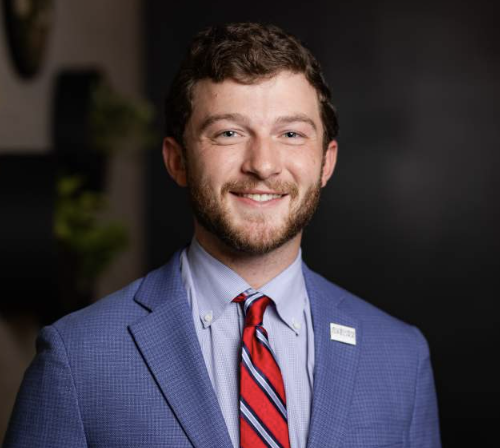
Travis Harrison
Experience & Marketing Specialist
Q1: Starting as an intern and working your way into your current role, what did you learn early on that still shapes how you approach things today?
One thing that I believe people might overthink, or not realize the importance of, is consistency. The ability to show up every single day with a positive attitude, no matter what the day holds for you, is going to take you so far in your career. It doesn't matter if it's a day where I'm waking up early to work an event or it's a Monday morning and it's a typical week in the office. I'm showing up, I'm going to be happy to be there, I'm going to be ready to work, and I'm going to do that every single day. That alone is going to open so many doors and teach you so much.
I've always enjoyed going to work, being around coworkers, and getting to know people, so it comes naturally to me. But it doesn't come naturally to everyone, and I've seen what a difference that can make on a team.
Q2: You've been with Playeasy since your intern days. How has your perspective on the platform evolved over time?
It's different than most tools or software because I've gotten to know your team, and you do a really great job at listening to what destinations and rights holders are asking for. All the changes I've seen made to the platform over time have been something a destination or a rights holder asked for. By doing that, it's more of a partnership than a tool, and it's mutually beneficial.
In the early days I saw it as a matchmaking service - you've got this event that needs this sort of venue, and here's a destination that has it. Now I see it as a tool that integrates with our website and our CRM, which is much more than lead generation or matchmaking platform. The Playeasy team is not just adding new tools and letting it be either. It's not "here's the software, have fun." It's "here's the software, here's how we think it's best used, here's how other destinations are using it, let's make sure you get the value out of it." That's huge.
Q3: When you think about what event organizers need from destinations today, what stands out that maybe wasn't as important before?
The sports tourism landscape is constantly changing, but one thing that has always been received well is how hard we work to act like true partners to any event we're involved with. Parts of the contracts we put together are built to make our team part of their team. We're on weekly calls and endless email chains, on site on event day, and offering to help set up if they need it. Not every event needs that - some are very turnkey, they handle their own operations and marketing and just need a facility. But the relationships where we see the most impact are the ones where they bring us in and everyone gets involved.
Over time I’ve noticed it’s less about our relationship with the event organizer, and more about how we build a relationship between them, our local parks and rec department, and our team. At the end of the day, it's parks and rec's facilities. The event trusts us, parks and rec trust us, but they don't really know each other. So, the question becomes, how do we make this work for both of them, and what role do we actually play in making that happen?
Jake's Take
When I think of Auburn-Opelika, I immediately think warm, friendly, genuinely good people. We've had the pleasure of working with AO Tourism since 2020 and it's been cool to see Travis grow from an intern to where he's at today as Experience and Marketing Specialist.
I took a similar path at Playeasy starting as an intern and working my way into my current role, so I can relate to a lot of what Travis covers: consistency, saying yes to most things early on, having a growth mindset, and learning from those around you.
What's also been exciting to watch is how Travis and their team have evolved the way Auburn-Opelika uses Playeasy. Their website and Playeasy are synced together so he's only updating things in one place now which has freed him up to focus on stuff that actually moves the needle, like adding local promotions and building out the visitor experience side of things. He's also been intentional about where Compass lives on their site, putting it in the spots where visitors naturally have questions.
If you haven't met Travis, you can just sense his drive and genuine passion for Auburn-Opelika throughout this whole conversation. Tune in to hear how they're continuing to level up their event organizer experience and what they have coming next.
Q4: What has worked well for you guys over the past year specifically within Playeasy?
The microsites and embed elements have been game changers. Previously, before Playeasy could integrate with our website and CRM, I was managing two databases - all my facilities on Playeasy and all my facilities on my normal CMS. Being able to combine those into one where my CRM is feeding into my CMS and feeding over to Playeasy, made my life so much easier.
Instead of being bogged down maintaining and updating facilities and imagery in multiple places, I only have to do it in my CRM and it goes everywhere. That frees me up to focus on how to leverage Playeasy in partnerships with local businesses, or how to train a rights holder on how to embed the microsite I built for them on their site. I can focus on making more of an impact instead of getting caught up in the busy work of maintaining multiple databases.
Q5: Have you gotten local businesses involved with offering promotions yet?
That is the next thing on the docket for us. We just got Compass up and running and it's been a lot of fun to implement. I'm brainstorming ways to use Compass outside of just on our website - on site at events and in hotels. But right now, my goal is to start training local businesses on how they can offer discounts to visitors for certain events, because the value for them is incredible. I've built a PowerPoint and I'm waiting for the next downtown merchants meeting to go present it to them.
Q6: How are you thinking about implementing Compass across your destination?
The first thing we've done is place it on the AO Tourism domain across our plan your visit page, our events page, our local calendar of events, and our sports facilities page. The idea is to put it in places where people are going to have questions. Having Compass there is strategic because it is only trained on information from our website. Having it on the calendar of events is strategic as well because that is the most trafficked page on our whole site, and Compass can be an expert on all those events. Instead of clicking into each one, a visitor can look at the calendar and ask about a specific event and Compass will answer it faster.
The real value right now is that it's collecting all of these exchanges with users and we're going to be able to track what questions people are asking. We can take those and turn them into an FAQ page or create blogs around them. The fact that it's trained on all of our blog content is really impactful too. If someone asks where to eat and we just published a "top five places to eat in Auburn-Opelika" blog, that's the content it's going to pull from. It keeps things relevant, especially with large databases where things can get out of date.
Where I'd like to see it go is QR codes that link directly to Compass at all of our hotel properties, and some A-frame event signage we can put out when there are a lot of visitors in town.
Q7: Any specific examples over the past year where Playeasy really worked well for a partner or event?
I'm working with an upcoming event called the “Opelika Okey Dokey”, a gravel bike race put on by Gravel Roll. I built the microsite and the Gravel Roll team came back to me and said "I really wish we could just put this on our website." We didn't want the microsite we built for them to pull web traffic away from their own website, which is where all the route information lives and where people register.
I recently was taught by Jon how to get the embed codes from Playeasy so I mentioned you can just put the hotel element on your website. I asked him what his brand colors were, updated the element to match, and gave him the HTML code to embed directly on his site. That's a great example of what's possible when we partner using Playeasy.
Once we have local discounts live, we'll be able to do that with those too. On the flip side, for events that don't have a strong web presence or the know-how to embed elements on a website, we can take that responsibility off them entirely. I build them a microsite that has everything their attendees would need, send it over, and they share it with their registrants. Setting up a microsite takes about five minutes. I send it to the partner and either get them set up as a manager or just offer to make edits for them to keep their lives simple.
Q8: How has your approach to visitor experiences and destination marketing changed as your role has grown?
I’ve learned to tell more stories in our destination marketing. The way I have tried to shape Auburn-Opelika’s brand is by positioning it as a place full of great stories and lasting memories, and inviting rights holders, athletes and attendees to be part of that experience. It's not "These are our facilities, these are our restaurants, these are our hotels, come host your event here." It's so much more than that. It's "this is what makes our community special." Let's use the event you're bringing here as an opportunity to tell a story about something that happened in our destination.
The most recent example is the USA Wheelchair Handball team. Auburn University and the City of Auburn have a long history with the sport of handball. During that history, a man named Ford Dyke, who is now a professor on Auburn's campus and works in adapted athletics, helped found the USA Wheelchair Handball team. We've been working extremely closely with them to organize tryouts, training camps, and now we're putting together a send-off camp before they go to France to compete in the EuroForAll Championship. This is a United States national team that represents the USA in the Paralympics and global wheelchair handball competitions. And it's happening in Auburn, Alabama.
How many people know about handball, let alone wheelchair handball? Not too many, but it has such a big impact and it's such a unique story. I see that as one big example of how you use sports tourism to tell stories. Instead of a campaign around "here are all our facilities," I'm taking this story and turning it into a marketing campaign that teaches someone something new and shows how our team genuinely cares about the sports and athletes that come through here. It still showcases the facilities and our ability to service an event, but it does it in a completely different way. It's a lot more interesting, and a lot more fun for me too.
Q9: What advice would you give someone just getting started in the DMO world?
Be a sponge. Learn as much as you can and say yes to any opportunity someone gives you, even if it doesn't sound super exciting. You can learn something from everything and everyone.
It goes back to showing up, being eager, and saying yes to the doors that are open to you. Don't pass up an opportunity because you think you're above it. Just say yes to everything at the start and show up with a smile on your face.
Interested in Exploring Auburn-Opelika Further?
Where Ideas Turn Into Action
Join us at the 2026 Playeasy Innovators Summit to connect with peers across the sports tourism & events ecosystem and dive deeper into the ideas shaping the future of destinations and experiences.

Interested in learning more?
If you’d like to learn more about Playeasy or explore ways to collaborate, we’d love to connect.